
EXECUTIVE SUMMARY
- A radiology report is written for your clinician, and the impression is usually the shortest summary of what matters most.
- Words such as unremarkable, incidental and follow up do not automatically mean something dangerous was found.
- Your physician is the right person to connect the report with your symptoms, exam, history and next steps.
Learning how to read a radiology report can help you understand the main message without jumping to the worst conclusion. Your report is a medical document for your referring physician, so use it as a guide for questions, not as a final diagnosis by itself.
Start with purpose *before reading details*
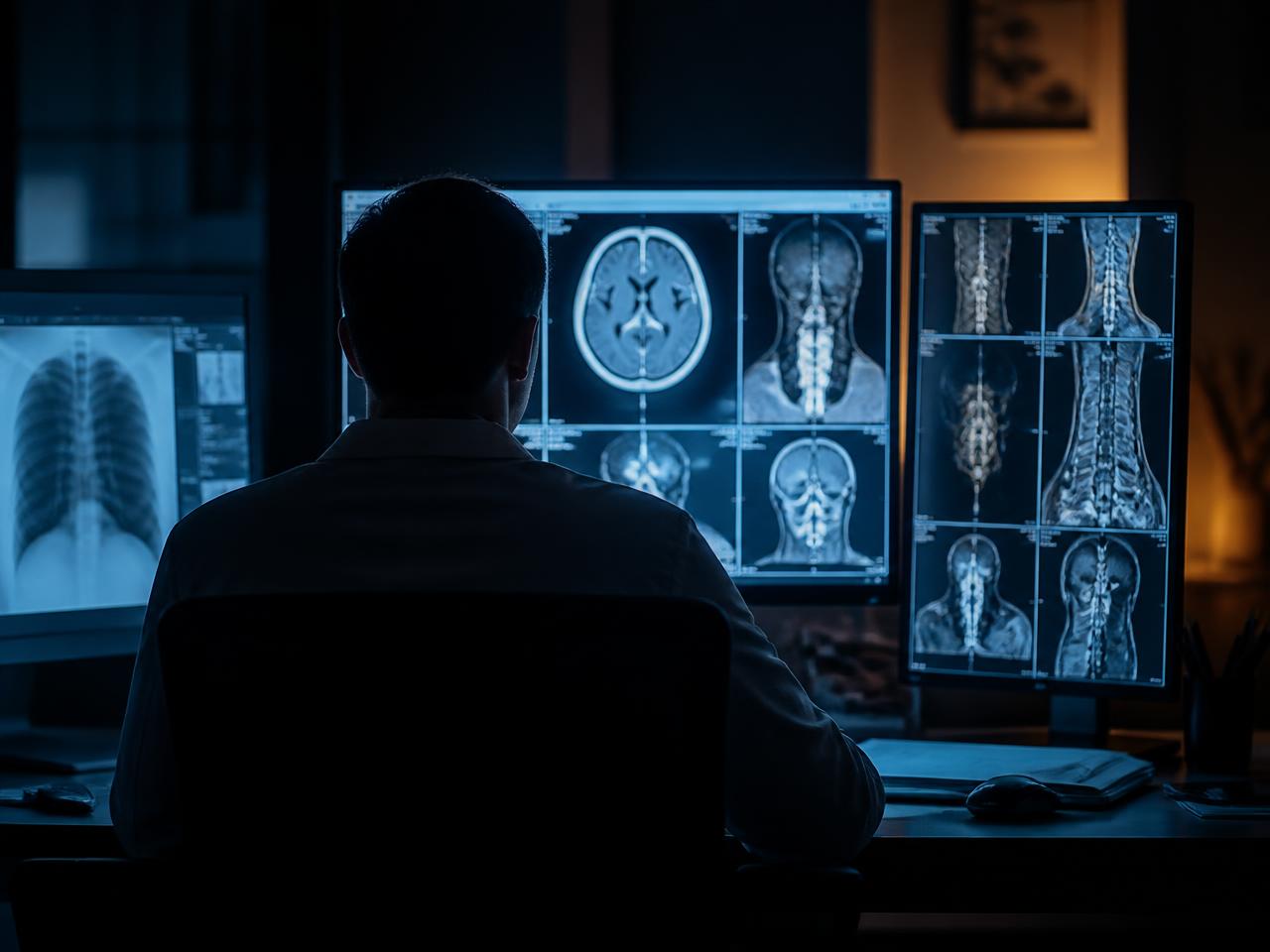
A radiology report is a communication from the radiologist to the clinician who ordered your exam. It describes what was seen on MRI, CT, ultrasound, mammography or X-ray, and it often compares the current study with prior imaging. In Glendale and across Los Angeles County, many patients see reports in a portal before their physician has reviewed them. That timing can make ordinary medical language feel alarming, even when the findings are routine or expected.
The safest way to read the report is to ask, what question was the exam trying to answer. A knee MRI for pain after a sports injury is not trying to evaluate every condition in the body. A chest CT may mention old scarring, small nodules or other background findings while still answering the main clinical question. If you need help understanding when and how reports are released, Lucent explains getting your results for patients.
How to read a radiology report without panicking: start with the exam name, clinical history and comparison section, then read the impression before the long findings section. The impression usually tells you what the radiologist thinks is most important. Then write down questions for your physician, especially if the report does not match what you were told or what you are feeling.
Reports use cautious wording because radiologists describe images, not the full medical story. A finding can be real on the image but still need clinical context. Your physician may decide that no treatment is needed, that lab tests matter more, or that follow up imaging is appropriate. For personal next steps, always ask the clinician who ordered the test.
- Read the exam name first.
- Check the clinical question.
- Save decisions for your physician.
Know the sections *in plain terms*
Most reports follow a predictable structure, although wording varies. The header lists the exam type and date. The clinical history explains why the test was ordered. The technique describes how images were obtained, such as with contrast, without contrast, or with certain views. The comparison section notes whether older studies were available, which can be very important because stable findings are often less concerning than new or changing ones.
The findings section is the detailed description. It may move organ by organ, body part by body part, or image sequence by image sequence. This section can sound long and technical because the radiologist is documenting what was checked. Do not assume that more words mean a worse result. Some normal reports are detailed because the exam itself covers many structures.
The impression section is usually the key takeaway. If you searched for radiology report impression meaning, the simple answer is this: the impression is the radiologist’s concise summary of the most important results and recommendations. It may list a diagnosis, a likely explanation, a range of possibilities, or a recommended next step for the ordering physician to consider.
If a section is missing from your copy, it may be due to the type of exam or the way the portal displays information. You can request the formal report or images when needed. Lucent provides information about medical records requests if you need copies for your physician, another facility, or your personal files.
- Findings are detailed notes.
- Impression is the summary.
- Comparison can change meaning.
Questions before you book? We answer them.
Talk to our Glendale team about scheduling, preparation and what your plan covers, before you commit to an appointment.
Understand key words *without assuming danger*
Radiology has a vocabulary that can feel blunt or uncertain. Words such as mild, moderate, severe, acute, chronic, stable, suspicious, nonspecific and likely all carry meaning, but they are not meant to frighten you. Mild usually describes degree. Chronic often means longstanding. Stable means similar to prior imaging. Nonspecific means the appearance can fit more than one cause.
Unremarkable radiology language is usually reassuring. If a report says a structure is unremarkable, it generally means the radiologist did not see an abnormality worth reporting in that area. It does not mean the body part is unimportant, and it does not promise that every possible medical condition has been ruled out. It simply means the images did not show a notable problem there.
The phrase no acute abnormality often means there is no imaging sign of a new urgent problem, such as a recent fracture, major bleeding, or another immediate finding, depending on the exam. It does not always explain pain or symptoms. Some conditions are not visible on imaging, are too early to see, or require a different test. Your physician can connect the wording with your exam and history.
A radiologist may also use terms such as correlate clinically or recommend clinical correlation. This does not mean the report is incomplete. It means the image finding should be interpreted with symptoms, physical exam, lab work, medication history or other information. If you are unsure what a term means, bring the exact sentence to your doctor or use a patient question list from frequently asked questions.
- Unremarkable is usually reassuring.
- Stable often means unchanged.
- Nonspecific needs context.
Read the impression *as the summary*
The impression is the part most patients should read first after checking the exam type. It is usually shorter than the findings section and may be numbered. A radiologist uses it to highlight the most relevant observations. If the impression says there is no significant abnormality, the longer findings section may still list normal structures or minor age-related changes.
Radiology report impression meaning: the impression is not a separate test result, and it is not always a final diagnosis. It is the radiologist’s interpretation of the images in the context provided on the order. For example, the impression may say a tear is present, a mass is not seen, or a finding is probably benign. Your referring physician decides what that means for treatment or follow up.
Sometimes the impression includes uncertainty. Phrases like may represent, could reflect, or differential considerations mean the image appearance overlaps with more than one possibility. That does not mean the radiologist is guessing carelessly. It means imaging has limits, and the safest report is honest about those limits. Additional history, prior images, lab results or follow up can narrow the answer.
If the impression recommends another study, that recommendation should be discussed with the ordering clinician. Lucent Medical Imaging in Glendale offers several imaging services, including 3 Tesla MRI, low dose CT, ultrasound, 3D mammography, Sonocine automated whole breast ultrasound and digital X-ray, but the right test depends on your physician’s order and clinical question.
- Read the impression early.
- Uncertainty can be normal.
- Recommendations need clinician review.
Incidental findings *what they mean*
Incidental finding meaning: an incidental finding is something seen on imaging that was not the main reason for the exam. For example, a scan done for back pain might mention a kidney cyst, or a chest CT might mention a thyroid nodule. Incidental findings are common in the sense that imaging covers real anatomy beyond the original question, but each finding still needs appropriate context.
An incidental finding is not automatically dangerous. Many are benign, old, tiny or unrelated to symptoms. The report may describe features that help your physician decide whether it can be ignored, monitored, compared with prior imaging, or evaluated further. The emotional challenge is that the word incidental can feel dismissive, while the finding still appears in writing and may sound unfamiliar.
The most useful questions are practical. Has this been seen before. Does it have benign imaging features. Is it related to my symptoms. Does it need follow up imaging recommendation, a different test, lab work, or no action. Your physician can answer based on your age, history, risks and the full clinical picture. A radiologist may suggest a pathway, but your clinician applies it to you.
If prior imaging exists, make sure your care team knows where it was done. Comparisons can turn an alarming unknown into a stable known finding. Patients in nearby Burbank, Pasadena, Eagle Rock and other Los Angeles County communities often have studies from multiple centers, so gathering older reports or images may matter. Lucent’s contact information can help if your clinician needs to coordinate records.
- Incidental means unexpected.
- Many findings are benign.
- Prior images can help.
Follow up advice *why it appears*
A follow up imaging recommendation is a suggested next step based on what the radiologist sees and the clinical question on the order. It may ask for repeat imaging after time has passed, a different type of exam, comparison with prior studies, or correlation with symptoms. A recommendation is not the same as an emergency unless the report or your clinician clearly says it is urgent.
Why does my report recommend follow up imaging. The direct answer is that some findings are best understood by watching whether they change, confirming them with another method, or using a more targeted exam. For example, ultrasound may clarify a cystic area, MRI may better show soft tissue detail, and CT may show bone or lung detail, depending on the situation.
Do not schedule every recommended exam on your own without discussing it with your physician. Insurance authorization, timing, contrast decisions, medical history and the original reason for the test can all affect what should happen next. Your clinician may agree, modify the plan, compare with prior records first, or decide the recommendation is not needed for your situation.
If your physician orders another exam, you can use Lucent’s request an appointment page to begin scheduling. For questions about preparation, timing or what to bring, review before your visit so the appointment supports the clinical question as clearly as possible.
- Follow up is often routine.
- Timing may be important.
- Ask before scheduling.
Breast report terms *including BI-RADS*
BI-RADS is a standardized reporting system used for breast imaging, including mammography, breast ultrasound and breast MRI. It helps radiologists communicate the level of concern and the recommended next step. If your report includes BI-RADS, read the category together with the recommendation, not as an isolated label. Your clinician can explain how it applies to your breast history and risk factors.
What does BI-RADS mean on a mammogram report. BI-RADS is a category that summarizes breast imaging findings and guides follow up. Some categories indicate a negative or benign result, some mean more imaging is needed, and others recommend short interval follow up or biopsy consideration. The category is a communication tool, not a complete description of your overall breast health.
Dense breast tissue may also appear in reports. Density can make mammograms harder to interpret and may lead your clinician to discuss supplemental screening in selected patients. Lucent offers 3D mammography and breast ultrasound services, including Sonocine automated whole breast ultrasound, when ordered or appropriate for the clinical question.
If a breast report asks you to return for additional views, try not to assume the worst. Additional imaging is often used to see an area more clearly, resolve overlap, or complete an evaluation. The result may be benign, need monitoring, or need tissue sampling. Your physician and radiology team should guide the next step based on the final report.
- BI-RADS guides next steps.
- Density affects visibility.
- Callbacks need clarification.
Ask better questions *after reading calmly*
After reading the report, pause before searching every phrase online. Internet results often mix rare diagnoses with common wording and may not match your exam. Instead, make a short list of questions for the clinician who ordered the test. Good questions focus on meaning, urgency, treatment and whether the result explains your symptoms.
Helpful questions include, what is the main takeaway, does this explain my symptoms, is anything urgent, do we need old images for comparison, and what should I do next. If the report mentions a follow up imaging recommendation, ask about timing and why that specific test is preferred. If it mentions incidental finding meaning in unfamiliar language, ask whether it is likely related to your current problem.
You can also ask who read the exam. Radiologists are physicians trained to interpret imaging studies and communicate findings to your care team. Lucent provides general information about radiologists for patients who want to understand their role. The radiologist does not replace your referring physician, because treatment decisions require the full medical context.
Bring the report to your appointment, or have it available in your patient portal. If your physician wants the images, not just the written report, request them early enough for transfer. For general patient process questions, Lucent’s patient resources can help you prepare without trying to interpret the study by yourself.
- Write questions down.
- Avoid panic searching.
- Ask about urgency.
When to call *and what to share*
Call the physician who ordered the exam if the report contains wording you do not understand, recommends follow up, or seems different from what you expected. Also call promptly if your symptoms are worsening or your physician gave you specific warning signs. A written report cannot tell you whether your current symptoms require urgent care. If you think you may have a medical emergency, seek emergency help.
When you call, share the exam date, facility, body part, and the exact sentence that concerns you. Ask whether the office has received the final report and images. Sometimes a patient portal releases a report before the ordering clinician has reviewed it. That gap can be stressful, but it does not necessarily mean the result is being ignored.
If you had imaging at Lucent Medical Imaging, 647 W Broadway, Glendale, CA 91204, you can call (818) 679-2867 for administrative questions about records, scheduling, or report routing. The staff can help with process questions, while your physician explains diagnosis and care. For location and contact details, use the contact page rather than relying on old saved information.
Reading reports gets easier when you know the structure and limits. Focus on the impression, look for recommendations, notice whether prior studies were compared, and ask your physician what the result means for you. The goal is not to become your own radiologist. The goal is to have a calmer, clearer conversation with your care team.
- Call your ordering physician.
- Share exact wording.
- Use reports for questions.
Key takeaways
- Start with the exam type and impression.
- Unremarkable usually means nothing notable was seen.
- Incidental findings are not automatically serious.
- Follow up recommendations need physician context.
- Ask your doctor what the report means for you.
Frequently asked questions
This article is general education, not medical advice. Talk with your physician about what is appropriate for your situation.
About the author

Lucent Clinical Team
Board-certified radiologists & imaging technologists
Every article is written and reviewed by the imaging team at our Glendale center, the same radiologists and technologists who read your study and walk you through the scanner room. We write what we find ourselves explaining at the front desk each week: what a scan feels like, what a report actually says, and what a bill is really made of.
Keep reading
What to expect during your first MRI scan
From check-in to results, here is exactly how an MRI appointment unfolds and what you can do to make it easier.
14 January 2026 · 9 min
MRI vs CT: how doctors choose between them
Both produce cross-sectional images, but they measure completely different things, which is why your physician orders one and not the other.
28 January 2026 · 9 min
Is a whole-body MRI right for you?
Preventive whole-body MRI is genuinely useful for some people and unnecessary for others. Here is how to tell the difference.
11 February 2026 · 8 min